Australia is a natural wonderland of beautiful beaches, crystal blue waters, amazing ancient rock formations and pristine rainforests.
Australia has 16 world heritage listed properties with its historic townships, bustling cities, vivid landscapes and exotic flora and fauna all adding to its unique appeal.
Australia's exotic flora and fauna cannot be found anywhere else on this planet and our lifestyle is the envy of the world and is second to none!
An American comes To Oz
Bart, a Texan rancher comes to Australia for a vacation. There he meets Wayne, an Aussie cattle farmer and gets speaking. The Aussie indicates to his huge wheat crop and the Texan says, 'Oh yeah. We now have wheat fields which are at the least twice as large.'
Then they stroll across the farm a little, and Wayne shows off his herd of cattle. Then Bart right away says, 'we now have longhorns which can be at least twice as large as your cows.'
The dialogue has, in the meantime, close to died when the Texan sees a herd of kangaroos hopping through the field and so he asks, 'Wow man what are these?'
'Wayne' the Aussie replies with an incredulous glee, 'What mate no grasshoppers in Texas ?.'
For its first 150 years, the Australian cuisine fluctuated in flavour somewhere between salty lard and shoe leather spiced with charcoal. Without doubt, it was the most boring food in the world. It is tempting to blame the English for the blandness. After all, they transported criminals who were able steal bread, but lacked the imagination to steal the condiments to give the bread some flavour. They also transported the Irish whose experience with exquisite meals amounted to little more than adding some grass clippings to potatoes.
Sadly, as unpalatable as it may be to let the Poms off the hook, the more probable explanation is that the harshness of the Australian environment offered little material to work with when creating recipes. Because the poor soils were unsuited to agriculture, it was only basic vegetables that could be grown with any reliability. Furthermore, chefs had to rely upon a limited range of domesticated European animals because, unlike native animals, they could be contained. Kangaroos won’t herd nicely towards an abattoir and jump most fences. Likewise, Wombats are individualistic creatures that if fenced in, tunnel their way to freedom. Possums and Koalas just climb over the top of fencers.
Aside from being shackled with a narrow range of meats, the lack of refrigeration forced Australian chefs to burn, salt or coat the meat in fat in order to reduce the risk of food poisoning. Perhaps some flavour could have been achieved by making sausages or salamis like many Mediterranean nations. Unfortunately, the menace of blowflies posed a significant risk of infusing a maggot flavour.
With ingredients scarce and the risk of contamination high, it was left to the ladies from charity organisations like the Salvation Army to save Australia's culinary soul. As part of their fund-raising drives, the ladies utilised two ingredients that were in abundance, wheat and eggs. They subsequently made pumpkin and mango scones; pavlovas; Anzac cookies, lamingtons and the humble slice. Till this day, the charitable recipes of Australia's culinary soldiers remain of the few that are recognised as Australian in origin and style.
Pavlova
After World War II, Australia underwent a culinary explosion. It is generally accepted that this explosion was due to the influx of Asian and European immigrants who subsequently expanded the Australian pallet. However this explanation seems flawed as Australia also received massive migration from China, Germany, Italy, and France during the gold rushes of the 1850's yet the basic burnt meat and boiled potatoes prevailed. The only lingering change was the addition of the dim sim to the fish and chip shop.
The more logical explanation for the culinary explosion is that the Snowy Mountains Scheme increased the productivity of the land. Furthermore, improvements in transportation and refrigeration allowed food to be transported over vast distances. As the great economist Adam Smith noted "specialisation is limited to market size." As refrigerated transport expanded the size of the farmer's market, the more they could grow niche products with confidence that they could be sold. As the range of produce in Australia increased, immigrants were able to access the ingredients necessary to continue their culinary traditions. Over time, they introduced Australian chefs to the great meals of the world.
Of course, Australians have never showed much respect to traditions and were soon corrupting recipes that have been considered perfect for centuries. They tested the boundaries of Japanese politeness by using sun-dried tomatoes and brie to make sushi. They bemused the French by marinating escargot in beer and throwing them on the barbie. They have even provoked knife sharpening amongst hot headed Italians by using tandoori paste and yoghurt to make pizza bases. The name given to this style of food is " Modern Australian. "
King Fish Tataki with shredded wonton, and cress in an Asian sauce
Today, the average Australian has a great deal of Mediterranean and Asian ingredients to work with when creating recipes. For example, a bachelor may host a party and buy some ham slices, sundried tomatoes, crackers, avocado, olives and cheeses to make some finger food. After the big night, he may wake up in the morning and wonder what he will eat for breakfast. In his pantry, he finds an old packet of Thai rice paper and sees the leftovers from the night before. Soon, the hungover bachelor is wrapping various combinations of leftover cheese, avocado, ham and olives in the rice paper. The result is some very imaginative recipes. Of course, the food that appeals to a bachelor with a hangover doesn’t always appeal to the wider population.
Australia’s café culture and “modern Australian” restaurants create recipes in much the same way. They creatively combine Asian and Mediterranean ingredients in ways that are very unique. Sometimes the combinations appeal to a wide variety of people. Sometimes they only appeal to bachelors with hangovers. Sometimes bachelors with hangovers prefer their own combinations. This diversity of tastes, diversity of ingredients, and diversity of recipes has made it difficult for modern Australian to be defined by a common style or common recipes. Furthermore, the diversity has made it difficult for modern Australian chefs to refine their recipes or create recipes that appeal to a broad audience.
While the Frankenstein recipes are generally coming from Australians with European heritage, Australians with Asian heritage are attaining more refinement by integrating different ideas into existing national cuisines. The most notable of these chefs is Tetsuya Wakuda; a Japanese migrant who blends French concepts with those of his homeland. Other Asian chefs have mixed recipes from different Asian countries to create Asian restaurants that are not indigenous to any Asian country. Such restaurants are highly prized because as well as serving extremely high quality food, they also serve in the Asian social style. Unlike European Modern Australian that serves food in the European style for individual consumption, the Asian Modern Australian serves food for group consumption; thus retaining the social element that is prized in social gatherings and business meetings.
A small minority of Australian chefs have also strived for a distinctly Australia cuisine via the use of native ingredients such as snake, witchetty grubs, crocodile and emu, which are all available in short supply. So far, most Australians have been reluctant to eat the native produce. Perhaps because the native produce still can't be supplied in sufficient quantities to generate a culture.
Jay, an American, was charged to compose a book about popular holy places far and wide. Firstly, Jay purchased a plane ticket and traveled to Columbus, Ohio, USA, suspecting that he would begin by working his way over the USA from East to West. Amusing anecdote about calling god on the telephone
On his first day he was inside a congregation taking photos when he saw a brilliant phone mounted on the divider with a sign that read "$10,000 per call".
Jay was charmed so he asked a minister who was walking around what the phone was utilized for.
The cleric answered that it was an immediate line to paradise and that for $10,000 you could converse with God. Jay expressed gratitude toward the cleric and went on his way.
Next stop was in Des Moines, Iowa and there at a huge church building, he saw a similar looking brilliant phone with a similar sign under it. Jay thought about whether this was a similar sort of phone he had found in Columbus and he asked a close-by pious devotee what its motivation was.
She let him know that it was an immediate line to paradise and that for $10,000 he could converse with God. Genuinely amiable, Jay expressed gratitude toward the cloister adherent for her offer assistance.
Jay then traversed America, Europe, England, Japan, New Zealand. In each congregation, he saw a similar looking brilliant phone with the same "$US10,000 per call" sign under it.
Jay chose to go toward the southern side of the equator to Australia to check whether they had a comparative telephone. He touched down in Western Australia, and once more, in the primary church he entered, there was a similar looking brilliant phone, yet this time the sign under it read "40 pennies for every call."
To some degree shocked, Jay got some information about the sign. 'Father Brian, I've voyaged everywhere throughout the world and I've seen this same brilliant phone in many places of worship. I'm informed that it is an immediate line to Heaven, yet in every one of them, the cost was $10,000 per call. Why is it so modest here?'
Father Brian grinned and replied, 'My child, you're in Australia now - this is Heaven, so it's only a local call.'
From pristine beaches to the awe-inspiring Australian outback, New South Wales (NSW) is one of the most unique places in the world. NSW Holidays are the ideal way to explore the State and enjoy stunning stretches of coastline, great bush walks in beautiful national parks and outstanding dining experiences in spectacular locations.
Lifesavers at Wanda Beach, Cronulla, 1964 or 1965. Photographer Jeff Carter. Image courtesy of the National Library of Australia
No examination of the Australian identity would be complete without looking at the surf. Over the last two centuries the Australian bush has been central to the way Australians have viewed themselves. Yet it is images of rolling waves, white beaches, surfers and bronzed Aussies' that now have most resonance and these are, without doubt, very much at the heart of how we see ourselves.
The vast majority of Australia's population lives in cities and towns on, or near, the coast. The beach is - and always has been - a place that millions of Australians escape to, where they can relax and play.
Surfing and the beach do not discriminate. They bring together a diverse range of people. Unlike other places around the world that have privately owned beaches, in Australia the beach is a public place. John Pilger, in his book A Secret Country , says, 'there are no proprietorial rights on an Australian beach' and there is 'a shared assumption of tolerance for each other.'
Surf lifesaving
Australia's first official surf lifesaving club - the first in the world - was founded at Bondi Beach, in Sydney, in 1906. There was little need for surf lifesaving clubs much before this time as it was illegal to swim in the surf during daylight hours before 1902. It was seen as immoral, and men and women could only 'bathe' in the early morning and late evening, and never at the same time!
In September 1902 at Manly Beach, William Gocher openly defied the law and entered the water at midday. Despite being arrested, no charges were laid. From then on, the sport of 'surf bathing' quickly grew.
As the sport became more popular, the dangers of the surf became apparent. It was then that groups of experienced surfers began to establish surf life saving clubs to help protect the less proficient swimmers from the dangers of the ocean.
It is a surprising fact that surf lifesaving clubs were formed before surfboard riding was introduced to Australia.
Surfing at Manly Beach, New South Wales, 1938-46. Photographer Ray Leighton. Image courtesy of the National Library of Australia
It was not until the summer of 1915 that Duke Kahanamoku landed in Sydney from Hawaii. At Freshwater Beach he rode a board - made out of local timber - and amazed the crowd with his display. He then took a woman out with him to ride tandem. She was Elizabeth Latham and she became Australia's first surfboard rider.
The darker side of the surf
Sunday 6 February 1938 - 'Black Sunday' - was a shocking reminder of the value of our surf life savers. A series of freak waves hit Bondi Beach and hundreds of people were swept out to sea. Many of the life savers had to be saved themselves, as desperate swimmers grabbed onto rescue lines and dragged them underwater. But thanks to the dedication and bravery of the surf lifesavers 300 people were eventually rescued.
A united voice
The New South Wales Surf Bathing Association was founded in 1907. The association was seen as vital for the growing number of surf lifesaving clubs to have a 'common voice' in their efforts to raise funds and obtain assistance from local councils and the state government.
The name of the association was later changed to the Surf Life Saving Association of Australia, which came to represent surf clubs nationwide. In 1991 the association changed again to Surf Life Saving Australia (SLSA), its present name.
Since its formation SLSA has been helping to protect and save the lives of the nation's beach-goers, with over 440,000 people rescued. Today SLSA is Australia's largest volunteer water safety organisation.
Australian surf lifesavers have rescued more than 500,000 people in the 80 years since records have been kept, with the number of rescues each season in recent years fluctuating between 8,000 and 10,000.
An independent economic study conducted for Surf Life Saving Australia in 2005 concluded that if not for the presence of surf lifesavers, 485 people would drown each year and 313 would be permanently incapacitated as a result of accidents in the surf.
Growing up with lifesaving
Nippers
SLSC: Surf Life Saving Club, Nippers workshop on the beach, January 2002: Photographer Suzon Fuks. Image courtesy of the National Library of Australia
There are now over 40,000 junior surf lifesavers (Nippers) in Australia. Children can join the program from as young as seven years old. The aim of the junior program is to give children surf awareness and surf safety skills so that they can keep themselves safe at the beach.
They can also participate in board paddling, surfing, swimming, running, wading and other fun activities and games. These are the skills that allow children to compete in club, regional and state surf lifesaving carnivals.
Juniors
After 'Nippers', the Juniors program (aged 13 - 15) sees children learn various rescue techniques and gain surf rescue certificates. This is a pathway to getting their 'Bronze Medallion', participating in beach patrols and developing into patrolling lifesavers.
The spirit of competition - Ironmen & Ironwomen
As well as the vital community service Australia's life savers perform, they also engage in regular competition to maintain their skills and fitness.
These competitions are known as surf carnivals. They showcase an array of surf life saving disciplines and involve three main areas of competition - beach events, surf swimming events and surf craft events.
The pinnacle of surf lifesaving competition is the LightIce Australian Surf Life Saving Championships. Held over four days on the Gold Coast in Queensland, the championships attract more than 7,500 competitors ranging from veteran greats of the surf to young champions in the making, as well as established stars like Olympic kayaking gold medallist Clint Robinson.
Competitors from all of Australia's surf clubs take part in the championships, along with top overseas lifesavers from other countries including the USA, UK, South Africa, Japan and New Zealand. Only the Olympic Games boast more competitors! The championships use more than 500 officials and are nationally televised.
AQUARISTS are trying to get their head around the discovery of a bizarre double-headed prawn.
The crustacean almost ended up as lunch for some sharks at a north Queensland aquarium before being discovered by stunned staff in a frozen food packet.
Aquarist Laura Colton, from Reef HQ Aquarium in Townsville, told the ABC she was preparing to feed the aquarium’s baby leopard sharks when she came across the prawn.
“I was counting out a few prawns and fish and I grabbed a handful prawns, and at first I thought there were two stuck together and then realised it was a prawn with two heads,” Ms Colton said.
“I have never seen anything like this and neither has anyone else in the team.”
She said she had to double check the crustacean to make sure it was not just two prawns stuck together.
“The next thing I looked for was to see if it had been caught in the middle of a moult, so they do shed that skeleton on the outside,” Ms Colton said.
“It wasn’t that either so if you had a look at the animal, there’s two guts in there, even two sets of legs coming from the front part as well, so it’s definitely two heads.”
Reef HQ has posted the photo of the prawn on its Facebook account, attracting hundreds of comments and shares.
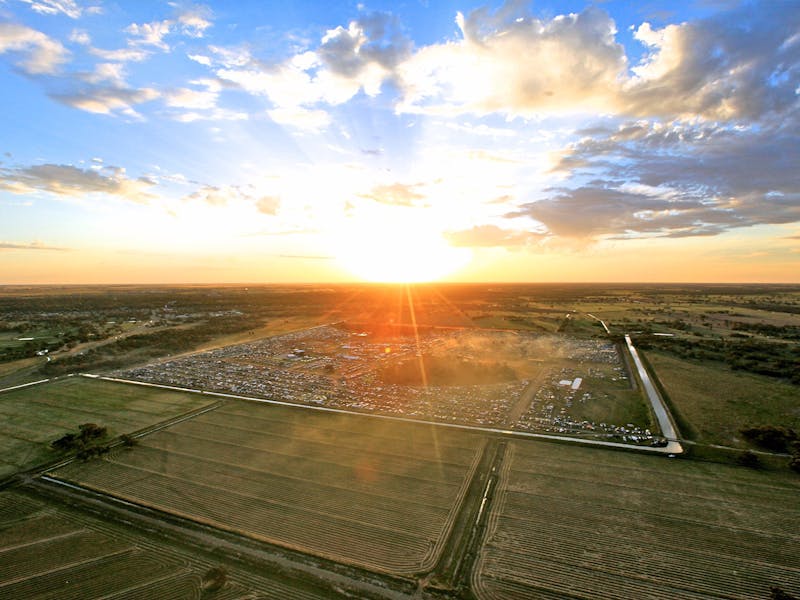
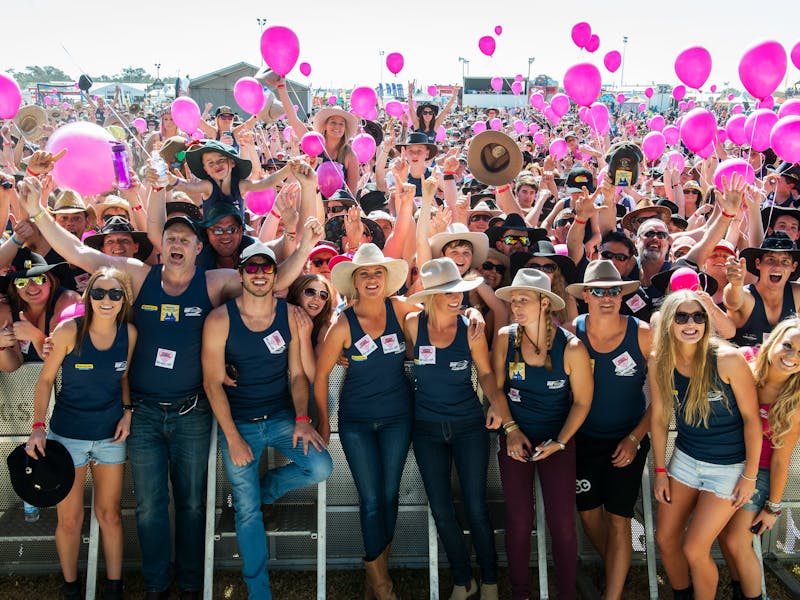
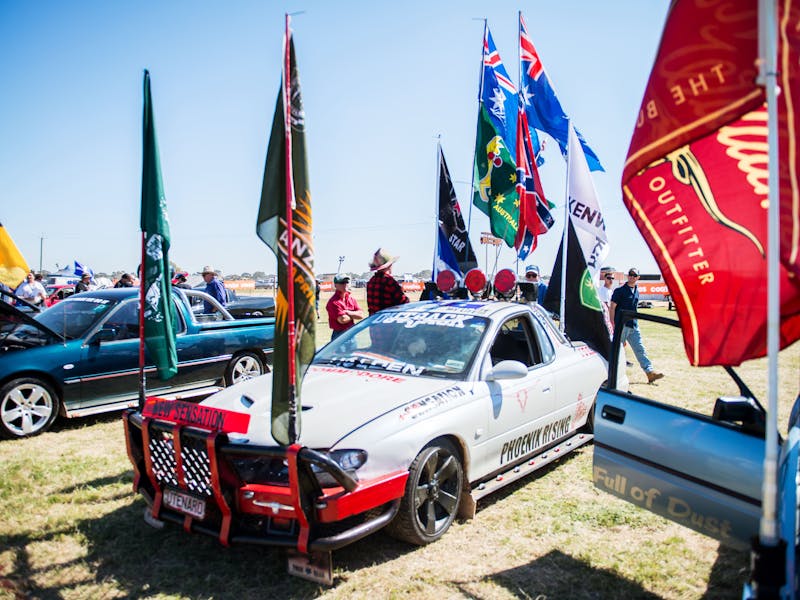
The Deni Ute Muster is an iconic event played out on some of the largest, flattest plains on earth. It is recognised as one of Australia's premier rural events that encapsulates the diversity, tradition and vibrancy of Australia. At the core of the festival is the Guinness World Record breaking Ute muster and blue singlet count which see thousands of people from every capital city, town and corner of the land converge to be a part of this unique event.
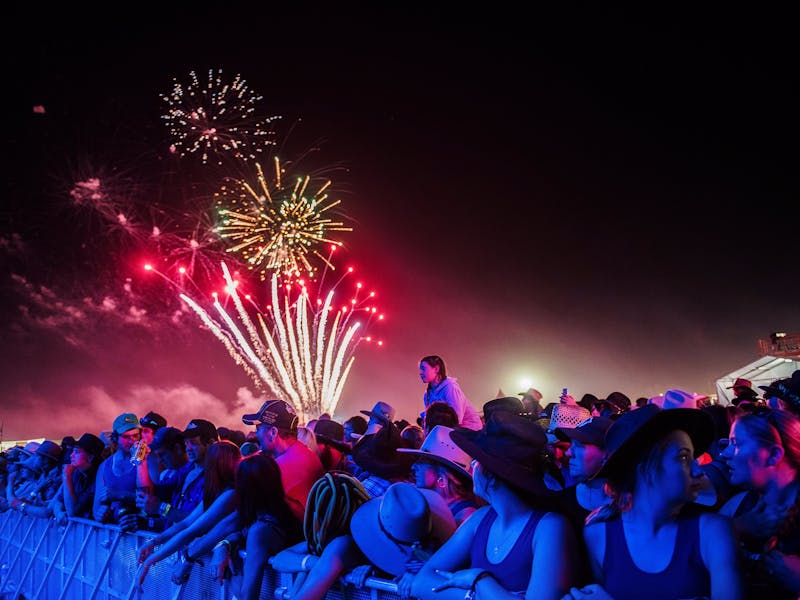
Keith Urban, Shannon Noll, James Reyne, John Williamson, Troy Cassar-Daley, Adam Brand and The Outlaws, Busby Marou, Catherine Britt plus many more mega stars will be performing at the event in 2016.
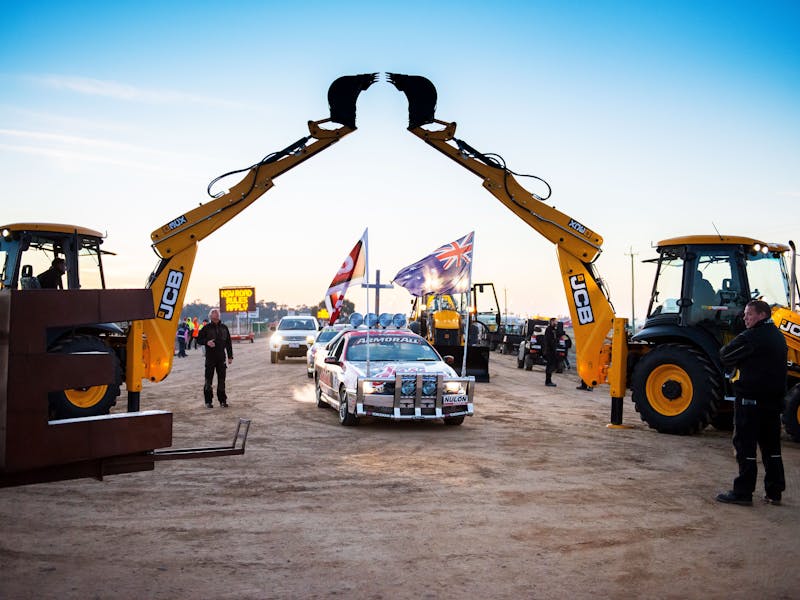
The two-day event consists of World Record blue singlet count, live music concerts, show n' shine, bullride spectacular, trade and catering stalls, whip cracking, woodchop demonstrations, helicopter rides, Brophy's Circus, camel rides, AFL on the big screen, and the Sunrice family centre.
The flood of coverage of the centenary of Gallipoli and the first world war profoundly shapes the way we think of Australia’s history; but we suppress other violent events in our own country that also shaped us.
On Australian colonial frontiers, violence and conciliation went hand-in-hand. Acts of aggression, retribution, and pacification were linked in complex ways — ways that were not always recorded in archival accounts. We come to our history often through the written word, or television, and objects too often are left as mere footnotes to our history.
So can historical objects from our frontier past gives us fresh perspectives in rethinking and writing colonial history, and give us a window on such violence and troubled diplomacy?
In an essay Australian novelist Delia Falconer wrote for the the Australian Book Review in 1999, she noted evocatively that using objects as originating points for our research is like “walking though the back door of history, you don’t necessarily end up at the front door of the same house”.
In the course of my work – in Australian and Pacific-region colonial histories – I came across a curious 19th-century heart-shaped breastplate (main image) and found myself at the front door of frontier massacre. The breastplate was given to “U. Robert King of the Big River and Big Leather Tribes” by an unknown settler at Goonal station, established in 1843 on the Gwydir River or “Big River” in New South Wales.
The breastplate is clearly part of the widespread settler tradition of giving crescent-shaped breastplates plates to Aboriginal people for alliance and pacification, on a continent where there were no formal treaties.
Yet with its heart-shaped form it is exceptional, and at the top – between an emu and kangaroo – it shows an intriguing motif of crossed spears and gum boughs, similar in style to North American “peace medals” given to native Americans that displayed a crossed hatchet and peace pipe, suggesting pacification or the halting of violent relations.
‘Mounted Police and Blacks’ depicts the killing of Aboriginals at Slaughterhouse Creek by British troops.Wikimedia Commons
The heart motif in European tradition is a symbol of love, friendship, and affiliation, but also of “bone fides” or good faith. Yet, as it turns out, this strange and unique object can be traced directly to the Gwydir River, in the New England region, and to the general vicinity of two of the most infamous massacres in Australian history: the Waterloo Creek massacreand the Myall Creek massacre of Kamilaroi peoples in 1838.
In this year, escalating frontier skirmishes between settlers and Aboriginal peoples led the Governor to dispatch Major James Nunn to the region to “suppress these outrages” by the “blacks”. Nunn led a group of more than 20 troopers to the Liverpool Plains district in January of 1838.
On January 26 1838, known as “Foundation Day”, our precursor to Australia Day, Major Nunn and his group attacked a large group of Aborigines camped by a lagoon at Waterloo Creek (or Slaughterhouse Creek), resulting in what most historians agree were the deaths of at least 30 Aboriginal people.
Vigilante-settlers continued Nunn’s campaign, riding the country shooting Aboriginal people they could find, in what Muswellbrook Magistrate Edward Denny Day would come to call a “war of extermination” on the Gwydir.
Five months later, on the afternoon of Sunday June 10 1838, a gang of 11 convict and ex-convict stockmen led by a squatter, surrounded and tied up Wirrayaraay Aboriginal men, women and children, who were camped peacefully next to the huts on the Myall Creek cattle station of Henry Dangar, near Bingara on the Gwydir River.
They were taken away and slaughtered. The gang later burned the decapitated bodies. Despite public outcry, and after a second trail, seven were hanged in December 1838 in one of the few instances when white men were tried, convicted and hanged for the mass-killing of Aboriginal people.
When His Honor Judge Burton passed sentence on the men, he remarked:
I sincerely hope that the grace of God may reach and penetrate the hardened hearts that could surround a funeral pile lighted by themselves, and gloat on the tortures and sufferings of so many of their fellow beings.
By the 1850s remaining Aboriginal people in the area continued to seek protection on stations were they could, with men and women often working as shepherds and stock men.
The breastplate given out to “U. Robert” of Big River, probably a senior Aboriginal man and possibly a shepherd, within decades of massacre, is a greatly unsettling object and represents a supreme conceit given the pernicious violence that occurred in the region as settlers pushed into northern New South Wales to take pastoral lands.
It is an object of alliance and friendship, given all too late. Aboriginal artist Andrea Fisher has rightly critiqued the coercive sentiment of the breastplate tradition with her reworkings and subversions of the breastplate motif in her works “blood” and “truth”.
Andrea Fisher, Blood.Museum of Democracy
But the heart-shaped breastplate may be suggestive of other meanings and valences. While I have not traced it to an individual settler with a “whispering in his heart” – Richard Windeyer’s compelling phraseechoed by historian Henry Reynold’s to suggest settler conscience – it may be nonetheless expressive of compassion and conscience.
In fact, Robert Brown, the owner of Goonal Station, to which the breastplate is linked, and a devout and evangelical Christian, went quite mad and was declared a “lunatic” in 1862, and died a year later in an asylum. Did he commission this breastplate for the Aboriginal people living and working on Goonal Station, their region only so recently invaded and beset by violence?
Was this the folly of a madman, or was it given in the name of friendship, reward, pacification, coercion or some form of conciliation with “U. Robert” and his family group? Did the whispering in Brown’s heart drive him mad? We may never know.
“Heart” can mean conscience, and it can also mean hope and acting in good faith. Every year, for 14 years now, commemoration ceremonies have been held at the site of the Myall Creek massacre. Here, the descendants of Aboriginal people and settlers come together in good faith as part of a community-based reconciliation project.
Artworks by Andrea Fisher.Museum of Democracy
The non-Aboriginal and Aboriginal participants in the reconciliation ceremonies at Myall creek have described “a great lifting”, and that they felt “set free” when they acknowledged the violence of their shared past.
Heart may also be the courage to remember, honour, and the strength to forgive in order to reconcile. These acts of reconciliation were possible at the Myall Creek site because some form of justice - at least, in part - had been seen to be done, unlike Waterloo Creek. The plaque on a stone memorial at the Myall Creek massacre site reads:
Erected on 10th June 2000 by a group of Aboriginal and non-Aboriginal Australians in an act of reconciliation and in acknowledgement of the truth of our shared history. We remember them/ Ngiyani winangay ganunga.
These ceremonies are rites of passage in settler societies, events crucial to peace-building and healing, where the past has been strewn with conflict and trust can be low; here through truth-telling and ritual the past is acknowledged and shared, and new stories are made.
These are emotional journeys where “fraught hearts” come into play and individual acts of consciousness and the building of trust matters.
Every year Australians engage in such grassroots commemorations, to mourn, reflect, say sorry, and honour, and to build new peaceful accords.
These community ceremonies are sometimes uncomfortably close to our hearts and homes, based on events that occurred under our very feet, and are far closer than battles on distant shores. There must be room for these too. Our most important history is too often at our own front door.
And its vestiges can be elicited by extraordinary objects in museum collections.
Sydney has once again proved why its New Year celebrations are world famous, with bursts of brilliance providing a spectacular backdrop to the Harbour Bridge and Opera House as Australia welcomed in 2016.
Synchronised to a soundtrack of some of 2015's biggest hits, including Uptown Funk and Hold Back the River, the almost 15-minute fireworks show sent crowds into rapturous cheers and applause.
The $7 million party kicked off early on Thursday, with a vast and proud Aboriginal Welcome to Country ceremony ushering in the iconic fireworks display, putting local Gadigal, Wangal and Gamaragal traditions front and centre
At 8.40pm the Sydney Harbour Bridge was transformed into a giant canvas, using new technologies to preseworld's oldest dance form in honour of Australia's First Nations culture, land and peoples.
Fireworks and special effects turned the structure into a giant Aboriginal flag, complete with a red waterfall cascading from the bridge base shortly after the sun set for the last time in 2015.
Sail boats, yachts and private ferries took up position on the harbour, for prime positions early on Thursday.
On land, the best vantage points filled up hours before the clock struck 12.
And the massive crowds that filled the Harbourside parks and reserves had claimed their prime positions early – some camping out for days to secure their spot.
The Sydney Opera House grounds were full by 2.30pm, with crowds settling in for a nine-and-a-half hour wait for the midnight fireworks.