Friday, September 30, 2016

Surf lifesaving

A way of life in the surf

Photo of lifesavers at Wanda beach, Cronulla, 1964 or 1965
Lifesavers at Wanda Beach, Cronulla, 1964 or 1965. Photographer Jeff Carter. Image courtesy of the National Library of Australia
No examination of the Australian identity would be complete without looking at the surf. Over the last two centuries the Australian bush has been central to the way Australians have viewed themselves. Yet it is images of rolling waves, white beaches, surfers and bronzed Aussies' that now have most resonance and these are, without doubt, very much at the heart of how we see ourselves.
The vast majority of Australia's population lives in cities and towns on, or near, the coast. The beach is - and always has been - a place that millions of Australians escape to, where they can relax and play.
Surfing and the beach do not discriminate. They bring together a diverse range of people. Unlike other places around the world that have privately owned beaches, in Australia the beach is a public place. John Pilger, in his book A Secret Country , says, 'there are no proprietorial rights on an Australian beach' and there is 'a shared assumption of tolerance for each other.'

Surf lifesaving

Australia's first official surf lifesaving club - the first in the world - was founded at Bondi Beach, in Sydney, in 1906. There was little need for surf lifesaving clubs much before this time as it was illegal to swim in the surf during daylight hours before 1902. It was seen as immoral, and men and women could only 'bathe' in the early morning and late evening, and never at the same time!
In September 1902 at Manly Beach, William Gocher openly defied the law and entered the water at midday. Despite being arrested, no charges were laid. From then on, the sport of 'surf bathing' quickly grew.
As the sport became more popular, the dangers of the surf became apparent. It was then that groups of experienced surfers began to establish surf life saving clubs to help protect the less proficient swimmers from the dangers of the ocean.
It is a surprising fact that surf lifesaving clubs were formed before surfboard riding was introduced to Australia.
Photo of surfing at Manly Beach, New South Wales, 1938-46
Surfing at Manly Beach, New South Wales, 1938-46. Photographer Ray Leighton. Image courtesy of the National Library of Australia
It was not until the summer of 1915 that Duke Kahanamoku landed in Sydney from Hawaii. At Freshwater Beach he rode a board - made out of local timber - and amazed the crowd with his display. He then took a woman out with him to ride tandem. She was Elizabeth Latham and she became Australia's first surfboard rider.

The darker side of the surf

Sunday 6 February 1938 - 'Black Sunday' - was a shocking reminder of the value of our surf life savers. A series of freak waves hit Bondi Beach and hundreds of people were swept out to sea. Many of the life savers had to be saved themselves, as desperate swimmers grabbed onto rescue lines and dragged them underwater. But thanks to the dedication and bravery of the surf lifesavers 300 people were eventually rescued.

A united voice

The New South Wales Surf Bathing Association was founded in 1907. The association was seen as vital for the growing number of surf lifesaving clubs to have a 'common voice' in their efforts to raise funds and obtain assistance from local councils and the state government.
The name of the association was later changed to the Surf Life Saving Association of Australia, which came to represent surf clubs nationwide. In 1991 the association changed again to Surf Life Saving Australia (SLSA), its present name.
Since its formation SLSA has been helping to protect and save the lives of the nation's beach-goers, with over 440,000 people rescued. Today SLSA is Australia's largest volunteer water safety organisation.
Australian surf lifesavers have rescued more than 500,000 people in the 80 years since records have been kept, with the number of rescues each season in recent years fluctuating between 8,000 and 10,000.
An independent economic study conducted for Surf Life Saving Australia in 2005 concluded that if not for the presence of surf lifesavers, 485 people would drown each year and 313 would be permanently incapacitated as a result of accidents in the surf.

Growing up with lifesaving

Nippers

Photo of the Surf Life Saving Club Nippers workshop, 2002
SLSC: Surf Life Saving Club, Nippers workshop on the beach, January 2002: Photographer Suzon Fuks. Image courtesy of the National Library of Australia
There are now over 40,000 junior surf lifesavers (Nippers) in Australia. Children can join the program from as young as seven years old. The aim of the junior program is to give children surf awareness and surf safety skills so that they can keep themselves safe at the beach.
They can also participate in board paddling, surfing, swimming, running, wading and other fun activities and games. These are the skills that allow children to compete in club, regional and state surf lifesaving carnivals.

Juniors

After 'Nippers', the Juniors program (aged 13 - 15) sees children learn various rescue techniques and gain surf rescue certificates. This is a pathway to getting their 'Bronze Medallion', participating in beach patrols and developing into patrolling lifesavers.

The spirit of competition - Ironmen & Ironwomen

As well as the vital community service Australia's life savers perform, they also engage in regular competition to maintain their skills and fitness.
These competitions are known as surf carnivals. They showcase an array of surf life saving disciplines and involve three main areas of competition - beach events, surf swimming events and surf craft events.
The pinnacle of surf lifesaving competition is the LightIce Australian Surf Life Saving Championships. Held over four days on the Gold Coast in Queensland, the championships attract more than 7,500 competitors ranging from veteran greats of the surf to young champions in the making, as well as established stars like Olympic kayaking gold medallist Clint Robinson.
Competitors from all of Australia's surf clubs take part in the championships, along with top overseas lifesavers from other countries including the USA, UK, South Africa, Japan and New Zealand. Only the Olympic Games boast more competitors! The championships use more than 500 officials and are nationally televised.

Saturday, September 3, 2016

Mystery of mutant, two-headed prawn found at Queensland aquarium


AQUARISTS are trying to get their head around the discovery of a bizarre double-headed prawn.
The crustacean almost ended up as lunch for some sharks at a north Queensland aquarium before being discovered by stunned staff in a frozen food packet.
Aquarist Laura Colton, from Reef HQ Aquarium in Townsville, told the ABC she was preparing to feed the aquarium’s baby leopard sharks when she came across the prawn.
“I was counting out a few prawns and fish and I grabbed a handful prawns, and at first I thought there were two stuck together and then realised it was a prawn with two heads,” Ms Colton said.
“I have never seen anything like this and neither has anyone else in the team.”
She said she had to double check the crustacean to make sure it was not just two prawns stuck together.
“The next thing I looked for was to see if it had been caught in the middle of a moult, so they do shed that skeleton on the outside,” Ms Colton said.
“It wasn’t that either so if you had a look at the animal, there’s two guts in there, even two sets of legs coming from the front part as well, so it’s definitely two heads.”
Reef HQ has posted the photo of the prawn on its Facebook account, attracting hundreds of comments and shares.

Tuesday, August 23, 2016

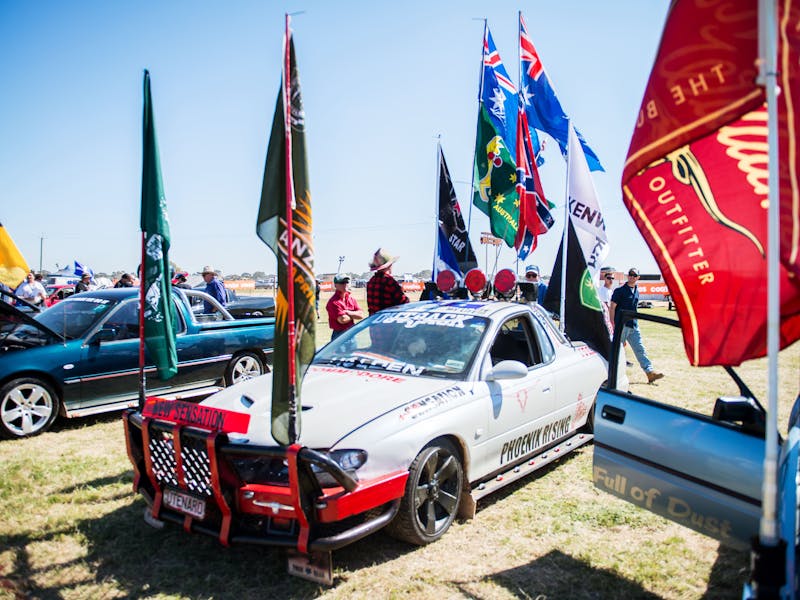
Deni Ute Muster - Deniliquin

Deni Ute Muster - Deniliquin


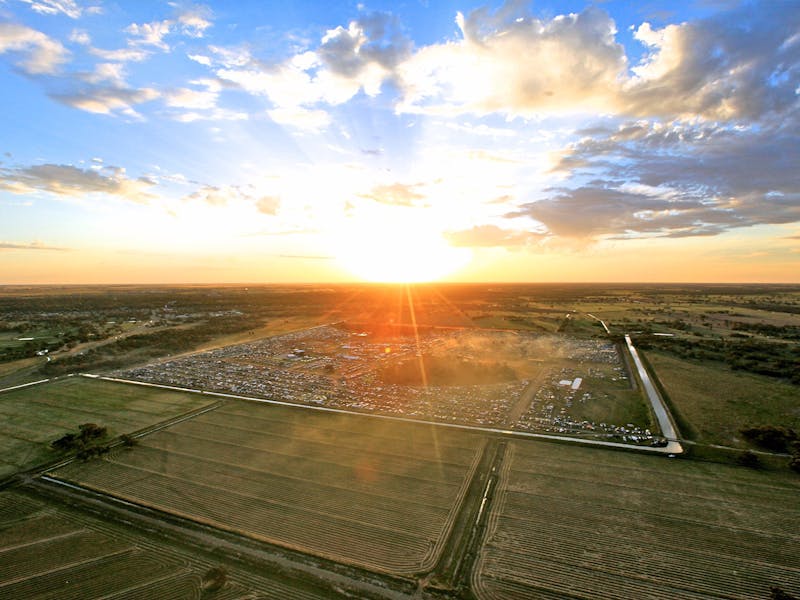
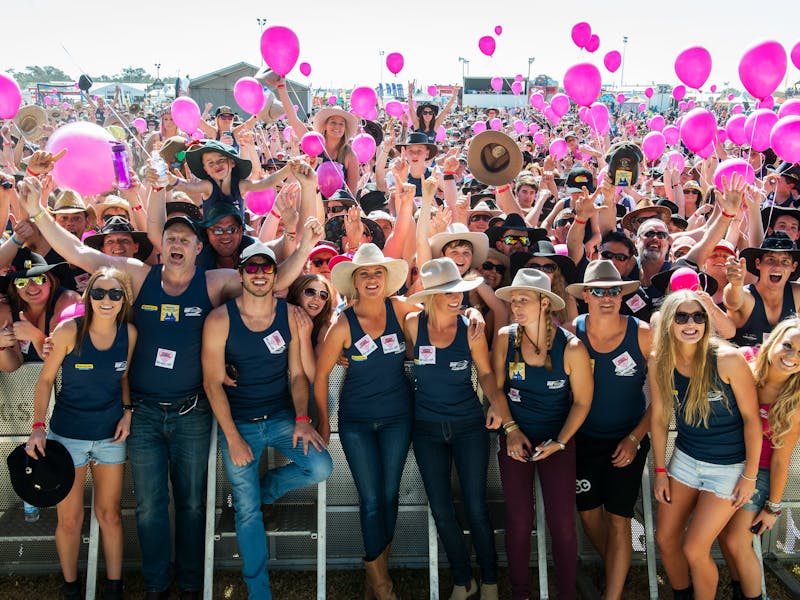
The Deni Ute Muster is an iconic event played out on some of the largest, flattest plains on earth. It is recognised as one of Australia's premier rural events that encapsulates the diversity, tradition and vibrancy of Australia. At the core of the festival is the Guinness World Record breaking Ute muster and blue singlet count which see thousands of people from every capital city, town and corner of the land converge to be a part of this unique event.
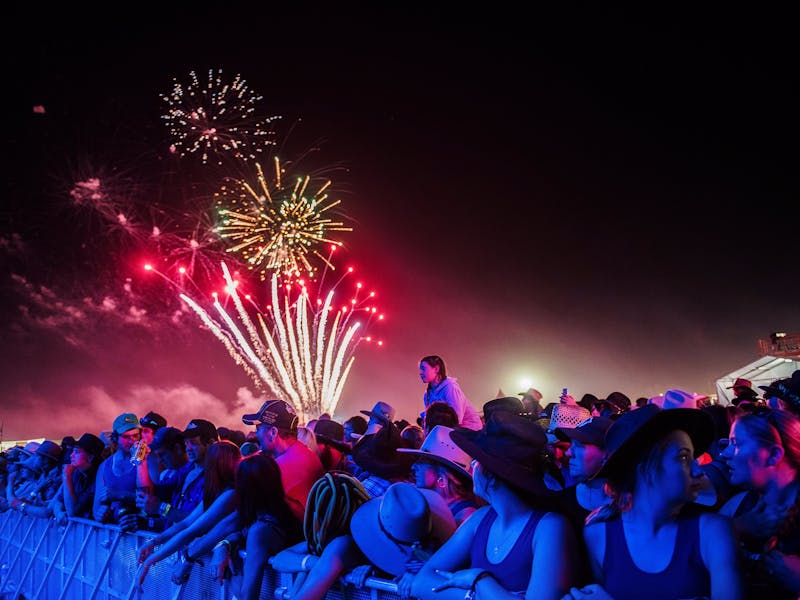
Keith Urban, Shannon Noll, James Reyne, John Williamson, Troy Cassar-Daley, Adam Brand and The Outlaws, Busby Marou, Catherine Britt plus many more mega stars will be performing at the event in 2016.
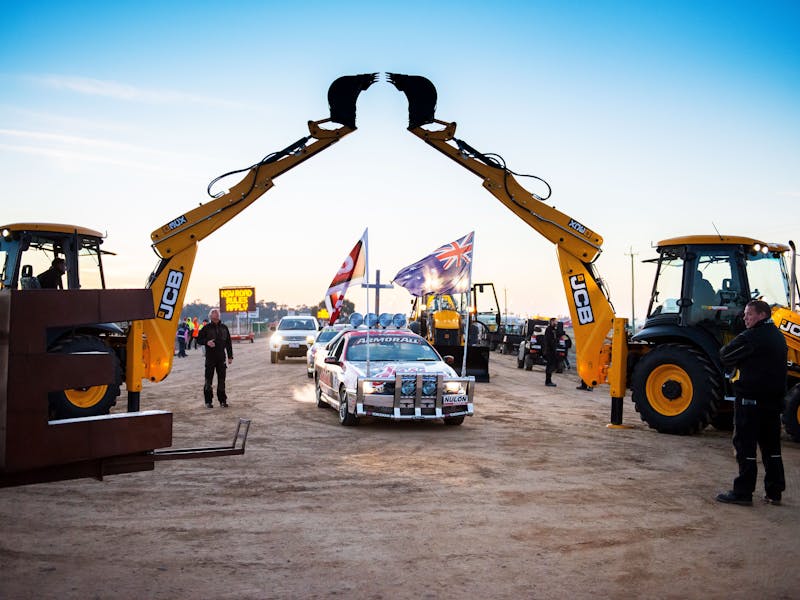
The two-day event consists of World Record blue singlet count, live music concerts, show n' shine, bullride spectacular, trade and catering stalls, whip cracking, woodchop demonstrations, helicopter rides, Brophy's Circus, camel rides, AFL on the big screen, and the Sunrice family centre.
For more information: www.deniutemuster.com.au

Tuesday, June 28, 2016

MY HOME TOWN SYDNEY IN WINTER

SYDNEY IN WINTER

The warm sunny days and chilly nights of winter make for perfect weather to get out and explore Sydney. Check out new restaurants, bars and pubs, snap up winter shopping bargains and book ahead for some top winter entertainment. Coming up soon: Aladdin The Musical and My Fair LadyThe Archibald Prize from July 16,State of Origin Game III, July 13 and theBledisloe Cup, August 20.

Monday, February 8, 2016

Australia Stories..... A breastplate reveals the story of an Australian frontier massacre

The flood of coverage of the centenary of Gallipoli and the first world war profoundly shapes the way we think of Australia’s history; but we suppress other violent events in our own country that also shaped us.
On Australian colonial frontiers, violence and conciliation went hand-in-hand. Acts of aggression, retribution, and pacification were linked in complex ways — ways that were not always recorded in archival accounts. We come to our history often through the written word, or television, and objects too often are left as mere footnotes to our history.
So can historical objects from our frontier past gives us fresh perspectives in rethinking and writing colonial history, and give us a window on such violence and troubled diplomacy?
In an essay Australian novelist Delia Falconer wrote for the the Australian Book Review in 1999, she noted evocatively that using objects as originating points for our research is like “walking though the back door of history, you don’t necessarily end up at the front door of the same house”.
In the course of my work – in Australian and Pacific-region colonial histories – I came across a curious 19th-century heart-shaped breastplate (main image) and found myself at the front door of frontier massacre. The breastplate was given to “U. Robert King of the Big River and Big Leather Tribes” by an unknown settler at Goonal station, established in 1843 on the Gwydir River or “Big River” in New South Wales.
The breastplate is clearly part of the widespread settler tradition of giving crescent-shaped breastplates plates to Aboriginal people for alliance and pacification, on a continent where there were no formal treaties.
Yet with its heart-shaped form it is exceptional, and at the top – between an emu and kangaroo – it shows an intriguing motif of crossed spears and gum boughs, similar in style to North American “peace medals” given to native Americans that displayed a crossed hatchet and peace pipe, suggesting pacification or the halting of violent relations.
‘Mounted Police and Blacks’ depicts the killing of Aboriginals at Slaughterhouse Creek by British troops. Wikimedia Commons
The heart motif in European tradition is a symbol of love, friendship, and affiliation, but also of “bone fides” or good faith. Yet, as it turns out, this strange and unique object can be traced directly to the Gwydir River, in the New England region, and to the general vicinity of two of the most infamous massacres in Australian history: the Waterloo Creek massacreand the Myall Creek massacre of Kamilaroi peoples in 1838.
In this year, escalating frontier skirmishes between settlers and Aboriginal peoples led the Governor to dispatch Major James Nunn to the region to “suppress these outrages” by the “blacks”. Nunn led a group of more than 20 troopers to the Liverpool Plains district in January of 1838.
On January 26 1838, known as “Foundation Day”, our precursor to Australia Day, Major Nunn and his group attacked a large group of Aborigines camped by a lagoon at Waterloo Creek (or Slaughterhouse Creek), resulting in what most historians agree were the deaths of at least 30 Aboriginal people.
Vigilante-settlers continued Nunn’s campaign, riding the country shooting Aboriginal people they could find, in what Muswellbrook Magistrate Edward Denny Day would come to call a “war of extermination” on the Gwydir.
Five months later, on the afternoon of Sunday June 10 1838, a gang of 11 convict and ex-convict stockmen led by a squatter, surrounded and tied up Wirrayaraay Aboriginal men, women and children, who were camped peacefully next to the huts on the Myall Creek cattle station of Henry Dangar, near Bingara on the Gwydir River.
They were taken away and slaughtered. The gang later burned the decapitated bodies. Despite public outcry, and after a second trail, seven were hanged in December 1838 in one of the few instances when white men were tried, convicted and hanged for the mass-killing of Aboriginal people.
When His Honor Judge Burton passed sentence on the men, he remarked:
I sincerely hope that the grace of God may reach and penetrate the hardened hearts that could surround a funeral pile lighted by themselves, and gloat on the tortures and sufferings of so many of their fellow beings.
By the 1850s remaining Aboriginal people in the area continued to seek protection on stations were they could, with men and women often working as shepherds and stock men.
The breastplate given out to “U. Robert” of Big River, probably a senior Aboriginal man and possibly a shepherd, within decades of massacre, is a greatly unsettling object and represents a supreme conceit given the pernicious violence that occurred in the region as settlers pushed into northern New South Wales to take pastoral lands.
It is an object of alliance and friendship, given all too late. Aboriginal artist Andrea Fisher has rightly critiqued the coercive sentiment of the breastplate tradition with her reworkings and subversions of the breastplate motif in her works “blood” and “truth”.
Andrea Fisher, Blood. Museum of Democracy
But the heart-shaped breastplate may be suggestive of other meanings and valences. While I have not traced it to an individual settler with a “whispering in his heart” – Richard Windeyer’s compelling phraseechoed by historian Henry Reynold’s to suggest settler conscience – it may be nonetheless expressive of compassion and conscience.
In fact, Robert Brown, the owner of Goonal Station, to which the breastplate is linked, and a devout and evangelical Christian, went quite mad and was declared a “lunatic” in 1862, and died a year later in an asylum. Did he commission this breastplate for the Aboriginal people living and working on Goonal Station, their region only so recently invaded and beset by violence?
Was this the folly of a madman, or was it given in the name of friendship, reward, pacification, coercion or some form of conciliation with “U. Robert” and his family group? Did the whispering in Brown’s heart drive him mad? We may never know.
“Heart” can mean conscience, and it can also mean hope and acting in good faith. Every year, for 14 years now, commemoration ceremonies have been held at the site of the Myall Creek massacre. Here, the descendants of Aboriginal people and settlers come together in good faith as part of a community-based reconciliation project.
Artworks by Andrea Fisher. Museum of Democracy
The non-Aboriginal and Aboriginal participants in the reconciliation ceremonies at Myall creek have described “a great lifting”, and that they felt “set free” when they acknowledged the violence of their shared past.
Heart may also be the courage to remember, honour, and the strength to forgive in order to reconcile. These acts of reconciliation were possible at the Myall Creek site because some form of justice - at least, in part - had been seen to be done, unlike Waterloo Creek. The plaque on a stone memorial at the Myall Creek massacre site reads:
Erected on 10th June 2000 by a group of Aboriginal and non-Aboriginal Australians in an act of reconciliation and in acknowledgement of the truth of our shared history. We remember them/ Ngiyani winangay ganunga.
These ceremonies are rites of passage in settler societies, events crucial to peace-building and healing, where the past has been strewn with conflict and trust can be low; here through truth-telling and ritual the past is acknowledged and shared, and new stories are made.
These are emotional journeys where “fraught hearts” come into play and individual acts of consciousness and the building of trust matters.
Every year Australians engage in such grassroots commemorations, to mourn, reflect, say sorry, and honour, and to build new peaceful accords.
These community ceremonies are sometimes uncomfortably close to our hearts and homes, based on events that occurred under our very feet, and are far closer than battles on distant shores. There must be room for these too. Our most important history is too often at our own front door.
And its vestiges can be elicited by extraordinary objects in museum collections.
Author    Penny Edmonds

Friday, January 1, 2016

Sydney New Year's Eve fireworks

Sydney has once again proved why its New Year celebrations are world famous, with bursts of brilliance providing a spectacular backdrop to the Harbour Bridge and Opera House as Australia welcomed in 2016.
Synchronised to a soundtrack of some of 2015's biggest hits, including Uptown Funk and Hold Back the River, the almost 15-minute fireworks show sent crowds into rapturous cheers and applause.
The $7 million party kicked off early on Thursday, with a vast and proud Aboriginal Welcome to Country ceremony ushering in the iconic fireworks display, putting local Gadigal, Wangal and Gamaragal traditions front and centre  

True colours: the midnight New Year's Eve fireworks on Sydney Harbour.

At 8.40pm the Sydney Harbour Bridge was transformed into a giant canvas, using new technologies to preseworld's oldest dance form in honour of Australia's First Nations culture, land and peoples.
Fireworks and special effects turned the structure into a giant Aboriginal flag, complete with a red waterfall cascading from the bridge base shortly after the sun set for the last time in 2015.
Sail boats, yachts and private ferries took up position on the harbour, for prime positions early on Thursday.

The fireworks seen from Barangaroo park.
On land, the best vantage points filled up hours before the clock struck 12.
And the massive crowds that filled the Harbourside parks and reserves had claimed their prime positions early – some camping out for days to secure their spot.
The Sydney Opera House grounds were full by 2.30pm, with crowds settling in for a nine-and-a-half hour wait for the midnight fireworks. 


Friday, December 18, 2015

Australian national dress

While Australia has no single uniform national costume, an Australian national dress style, based on specific local dress styles, has emerged in response to climate, lifestyle and identity. This is reflected in the modern design of dress by emerging and established designers which incorporate particular defining elements.
An Australian style can be seen clearly in the main types of local dress: bushwear and swimwear, along with Australiana and Indigenous designs. These have been formed by a larrikin attitude, the qualities of mateship and the dictates of an outdoors lifestyle. Dress is also characterised by the migrant experience and the process of cultural borrowing, which is part of the unique history of Australia.
Presenting Australian national dress on the international stage depends upon what localised style is being represented. It is a question of authenticity about Australian culture and identity.

Local dress styles

woman wearing a Sally Smith dress
Sally Smith Designs. Image courtesy of Vogue Australia.
Australian local dress styles are different from Australia's fashions. Dress has been influenced by the experience of living in rugged country as well as modern leisure activities such as swimming, surfing and beach culture. This is reflected in different fabrics, such as moleskin and drill cotton, developed for more practical wear.
The cut, cloth and style of beachwear and bushwear have been adapted to localised street dress, as have the colours of the Australian landscapes, flora and fauna to the extent that there is a recognisable national dress style. The creation of a national dress style reflecting on the outdoor beach experience and the native flora in the Sydney Botanic Gardens are used, for example, by dress designer Sally Smith, as inspiration for her dress designs as recognisably authentic modern Australian dress.
Surf board shorts have been adopted successfully as dress across Australia. If you move from the beach to the bush, then clothing is usually adapted to follow suit. A test of how far inland you could travel from the beach wearing only brief racing bathers, though, is only a bus ride from Bondi to the central business district in Sydney. (The Chaser, ABC 2007). The closer you get to the bush, the more likely you are to be wearing tough clothes, a felt hat and elastic-sided boots, as well as adopting a language of mateship and equality.

Stockmen, diggers and aviatrices – bushwear and its influence

In the 1930s, the image of the squatter's daughter and the aviatrix model helped construct the female bush figure. Trousers were adopted by the squatters' daughters and the aviatrices, and this contributed to trousers becoming a popular icon of modern Australian women. In the 1940s, women's experience in war time, including their contribution to the Women's Land Army, cemented the popularity of trousers for Australian women.
Freda Thompson
Unknown photographer, Freda Thompson (1906-1980), Pictured here in 1934 just before take off at Lympne Airport when she became the first Australian woman to fly solo from England to Australia, 1934. Courtesy of National Pioneer Women's Hall of Fame.
Fletcher Jones cemented the popularity of well-made smart trousers for men based on rigorous Italian tailoring and staff-owned factories and outlets.
In response to the colonial bush experience, Australian dress developed by stockmen and diggers was a preference for tough cotton drill or khaki pants or shorts, worsted wool coats or vests, oilskin coats, rabbit-fur felt hats and elastic-sided work or riding boots.
Today, these items are sold not only by bush outfitters like R.M. Williams, Baxter Boots and Akubra (hats), but also by dress companies such as Rivers, Colorado and Jeanswest. An advertisement by R.M. Williams promotes a national dress costume as: grazier shirt, solid-hide work belt, oilskin coat, Akubra hat, moleskin jeans and elastic-sided boots (R.M. Williams 2000).
This localised dress based on bushwear was adopted by the Australian Prime Minister as a form of Australia's national dress to be worn by world leaders attending the Asia Pacific Economic Cooperation (APEC) summit in 2007.

Goddess swimmers and surfers – swimwear and surf culture

Annette Kellerman
Unknown photographer, Annette Kellerman. Courtesy of National Pioneer Women's Hall of Fame and National Film and Sound Archive: 558337-5.
Since Federation, champion swimmers have been icons for the Australian body. A modern-day Venus worshipped around the world for her beautiful body and boldness, Annette Kellerman (1886–1975) was a distance swimmer, diver, and theatrical performer known as the 'Australian Mermaid'. Annette Kellerman shocked the world in 1907 by wearing a man's bathing costume that clung tightly to her torso and left her legs, arms and neck bare. In arguing her case in a Boston USA court, Kellerman stated that she was being practical rather than provocative and said that otherwise she 'may as well be swimming in chains'.
Subsequently, Kellerman designed and marketed the first modern one-piece swimsuit for women. Annette Kellerman greatly influenced public attitudes toward the female body. Kellerman published books instructing women on beauty and physical fitness, and lectured on health and exercise throughout Europe and America. Kellerman's own 'ideal' physique personified a new aesthetic of natural female beauty, one that valued athleticism and unadorned bodily display. In this way she was a trailblazer for the 'new woman'.
Paula Stafford and models
Unknown photographer,Paula Stafford (right) with her creations, Surfers Paradise, c. 1950. Courtesy of The Courier-Mail
It was not until after the Second World War, however, that the image of the bronzed swimmer became popular with large-scale migration of people with Mediterranean, Eurasian and Melanesian skins.
Paula Stafford is generally credited with being the first local manufacturer of bikinis in 1947, after cutting a one-piece in half in 1936. Stafford later made them at her home in Surfers Paradise after the Second World War, selling to 400 outlets by 1952. Bikinis finally began to dominate women's swimwear sales by the mid-1960s.
From the 1950s, brightly-coloured print shirts adopted from the Pacific Islands, such as Hawaii and the Fiji Islands, have become part of the male beach dress and translated into popular leisure shirts reflecting Australian lifestyles. The Australian pop band The Church, were known in the 1980s as much for their paisley shirts as their catchy melodies'.
men in the surf
Rennie Ellis, Ironmen, Portsea, 1990, Courtesy of Rennie Ellis Photographic Archive and National Library of Australia.
If there is a positive stereotypical image of Australian style it is spunky Bondi lifesavers in small Speedos and way-cool salt-bleached surf dudes in cord board shorts and wild printed shirts.
(Maggie Alderson, 'Relax, it's Australian', Sydney Morning Herald, 2 May 2000)
In March 2000, when Speedo launched its full-body Fastskin swimsuit, modelled after a shark's skin, the public lament was for the loss of the sensational bodies of the swimming stars (Harari 2000 in Craik). Today, even lifesavers wear long-sleeved tops or wetsuits and sun hats, as do children, as protection from the sun.
In response to the beach experience, surf board shorts, singlets, colourful shirts and thongs have been adopted as part of a national dress code by both males and females. Females have also adopted the loose-flowing sarong from Indonesia, sulu from the Fiji Islands and Punjabi shirts from India as a preferred choice of cut and garment style as beachwear, providing both sun protection and also as transition garments from the beaches to town.
While surf culture has come to represent an international Australian style, the fashion advice is 'Don't wear your speedos anywhere but in the water or on the beach. The shops might be walking distance from the sand, but that doesn't make it okay to pop in to a bookshop for a languid browse' ( Sydney Morning Herald, Lifestyle, 2006, comments).
man wearing Saba clothing
Saba, Men's spring summer 2007, Ocean Hoodi, Biscuit Short. Image courtesy of Saba
Along with swimwear, Australian brands of surfwear and beachwear have become internationally renowned: Queensland brand Billabong surfwear, Sydney urban Mambo shirts, Okanui board shorts, Rip Curl, and Quiksilver are now recognised as distinctly Australian purchases for tourists to Australia. With their sometimes hard-edged images, the swimwear represents an image of freedom, health, fitness and a larrikin attitude. The dominant message is one of attitude rather than obvious Australian motifs.

Larrikins – urban cool

The larrikin attitude, qualities of mateship based on the principles of a fair go and democratic debate, have also contributed to an Australian dress style.
group of larrikins
Rennie Ellis, Sharpies, Melbourne, 1973. Courtesy of Rennie Ellis Photographic Archive and National Library of Australia.
A larrikin dress and style contrasts distinctly with the bush and beach dress styles. While cabbage palm hats were characteristic of male dress in the Australian bush in the 19th century, the larrikins of Sydney's Rocks region around 1900 were distinguished by their cabbage palm hats and dubbed the 'Cabbage Tree Mob'.
While the term 'The Push' referred to gangs of small-time street criminals in Sydney's The Rocks district at this time, many years later, it was adopted by a loose but distinctive group, based in Sydney, in the 1950s and 1960s, who had a rebellious approach to life, embracing modernism and free thought. Members of The Push, artists, journalists, actors and students, who frequented cafes, coffee shops and pubs, tended to listen to 'cool' jazz and wear suits. In the 1960s, the women's liberation movement, the Vietnam War and the flower power generation also greatly influenced the style of dress, and un-dress.
In the 1960s the boot-wearing rockers, sometimes associated with the bodgies, widgies and sharpies, were seen as sworn enemies of the surfers – both groups recognisable from the localised dress styles.
Away from the beach and dance floor, surfies wore desert boots. Thongs, then were distinctly, uncool. To get boots ready for wearing, real surfies dragged them behind their woodies for a couple of miles.... The sworn enemy of the Australian surfie was the sandkickers or boot wearing, Rockers. At every opportunity the two groups would have a blue (Australian slang for rumble).

Footwear – boots and thongs

stockmen wearing moleskins, hats and boots
R.M. Williams stockworkers wearing moleskins, Akubra hats and elastic-sided boots. Courtesy of R.M. Williams.
Like Akubra hats, Blundstone was chosen to supply their boots in both world wars, which guaranteed expansion and longevity. In the post-Second World War period until now, its products are exported widely throughout the world.
Thongs are one of the most basic forms of footwear design worn for thousands of years across the world, and yet Australia claims a special identity with them (as evidenced by Kylie Minogue being hauled towards centre stage on a giant thong during the Sydney 2000 Olympic Games closing ceremony). Thongs are seen as essential Australian summer footwear for going to the beach, down to the local shops, to a barbecue or just about anywhere. At the beach they give protection against the hot sand and sharp rocks in shallow water.
The modern rubber thong was invented by New Zealander Maurice Yock, who patented the rubber 'jandal' design in 1957, which was believed to be derived from Japanese sandals made with wooden soles and fabric straps. Servicemen returning from occupied Japan after the Second World War popularised the footwear in both America and New Zealand. In 1959, Dunlop Footwear in Melbourne imported 300,000 pairs of thongs – the thong finally attaining widespread popularity in the 1970s.
Today, the thong has merged with the traditional footwear and feet decorations of the Indian sub-continent so that thongs with semi-precious stones are worn as dress and fashion items.

Headwear and millinery

man wearing Saba hat
Saba, hat, Men's spring summer 2007. Image courtesy of Saba.
Due to the lack of imported hats and the need to wear a hat in hot climate areas, cabbage palm hats were also a popular item of early Australian dress. These hats are significant as the only distinctive item of Australian dress made entirely from Australian materials, with the plaiting often done by local Aboriginal groups.
Modern versions of the cabbage palm hat are still made by Australian hatters and milliners as increasingly popular streetwear and as part of men's summer dress collections.
Emu feathers and horses have also influenced local dress. By 1900, an emu feather plume adorned the slouch hats of the Australian Light Horsemen, worn on active service in the Boer War and again in Egypt during the First World War when soldiers fought for the right to wear this plume.
The Akubra hat, made from rabbit hair in a mechanised felt making process, perhaps epitomises the look of bush headwear. The label 'Akubra' was coined in 1918 and has become synonymous with the hats themselves (Eager 1998).
Feathers, felt and trimmings continue to play a large part in the labour intensive Australia's headwear and millinery industry. Australian millinery themes, colour, materials and inspiration can vary from serpentine trees to a black cockatoo's plume and tropical flowers (see Serena Lindeman's 2006 award-winning creations).

Australiana motifs and textiles

man wearing Mambo clothing
Shorts, men's, 'Horn Player', screenprinted cotton, designed by Reg Mombassa, made by Mambo Graphics, Sydney, New South Wales, Australia, 1992. Image courtesy of Powerhouse Museum: 92/1959.
By the 1920s, a great deal was made of the use of Australian flora and fauna in designs along with boomerangs, shields and crossed spears, when Margaret Preston and others advocated the recognition of Aboriginal motifs and Australiana motifs. By the 1990s, the bold Australian print and the graphic Aboriginal design won admiration as world-recognised Australian fashion textiles. This can be seen in designs and styles in everyday dress especially, for example, with dd by Megan Salmon, who uses Indigenous designs under licence to create textiles for local dress inspired by, for example, the country of Gija people in the Kimberleys, Western Australia.

Sydney Olympics

At the Sydney Olympics in 2000, there was great use of Indigenous motifs and designs, as well as influence on designs which coincided with a more complicated and obvious sense of national identity. The designers of the outfits for the ceremonial outfits were Peter Morrissey, Jenny Kee and Linda Jackson, chosen for their distinctive Australian design approach and recognisable use of Australiana.
Mambo took the advice of athletes and abandoned ties and formal uniforms, opting instead for yellow and ochre striped shirts, bronze trousers and skirts, and ochre loose fitting jackets (with the Mambo logo emblazoned inside). For the closing ceremony, Mambo swapped the yellow shirts for a colourful shirt featuring a typical Mambo rendition of an Aussie suburban landscape...
Jennifer Craik, 'The Australian-ness of Australian Fashion and Dress', UnAustralia: The Cultural Studies Association of Australasia Annual Conference 2006, Canberra, 6-8 December 2006.

The authenticity was evident – a larrikin attitude represented by the board shorts with a jacket which referenced both Indigenous Australian earth colours and also the urban landscape – combining swimwear, bushwear and larrikinism in one bold sweep. The outfits were easily recognised as post-modern Australian national dress.